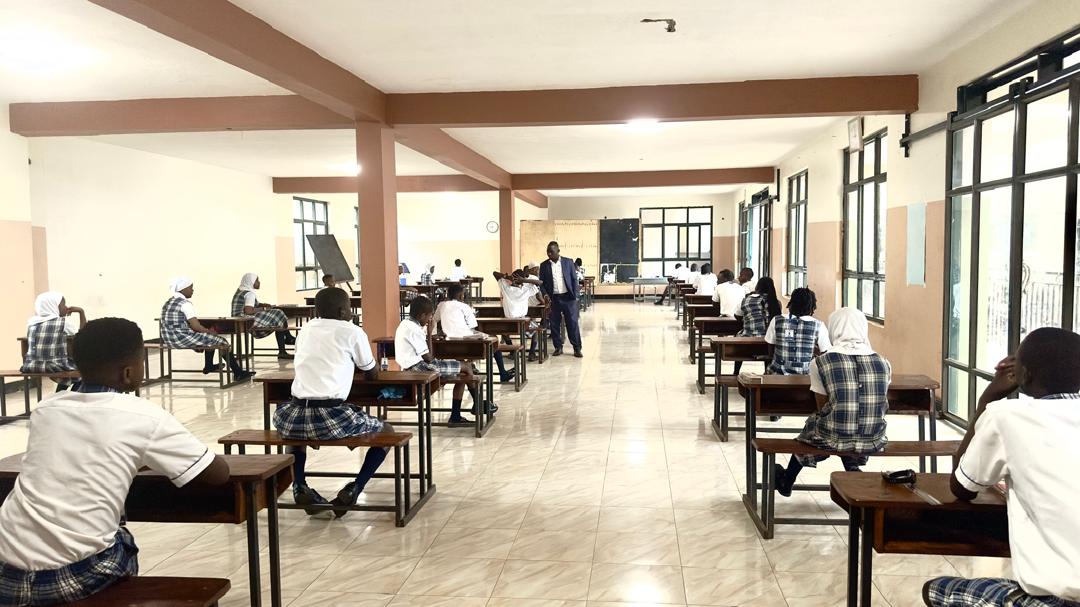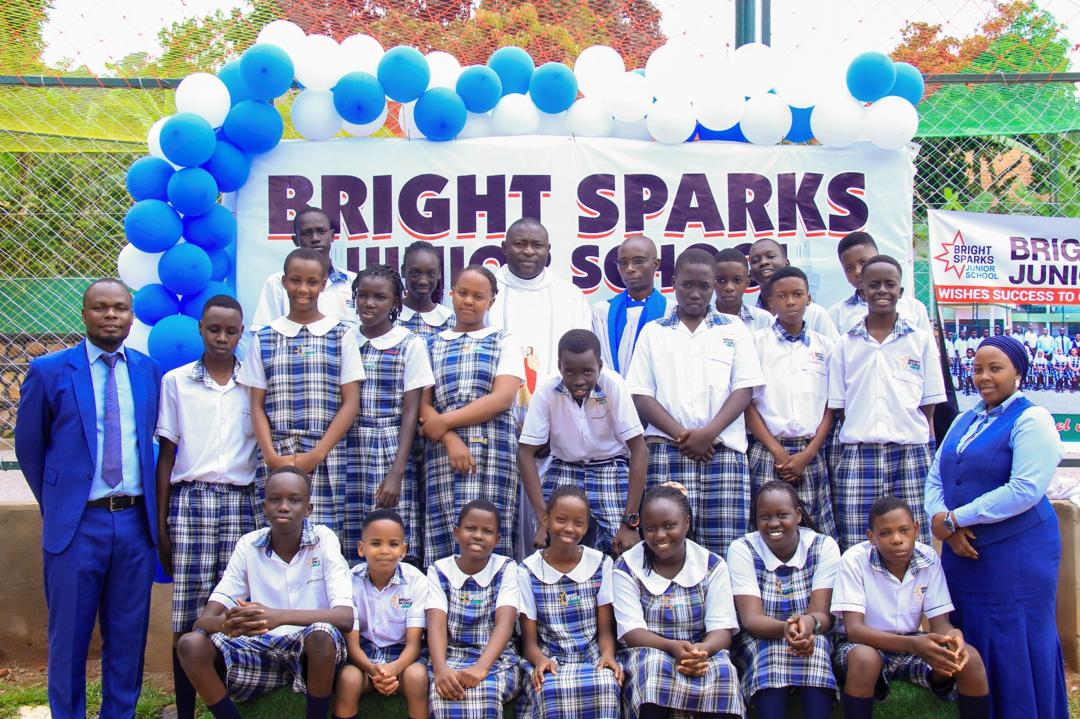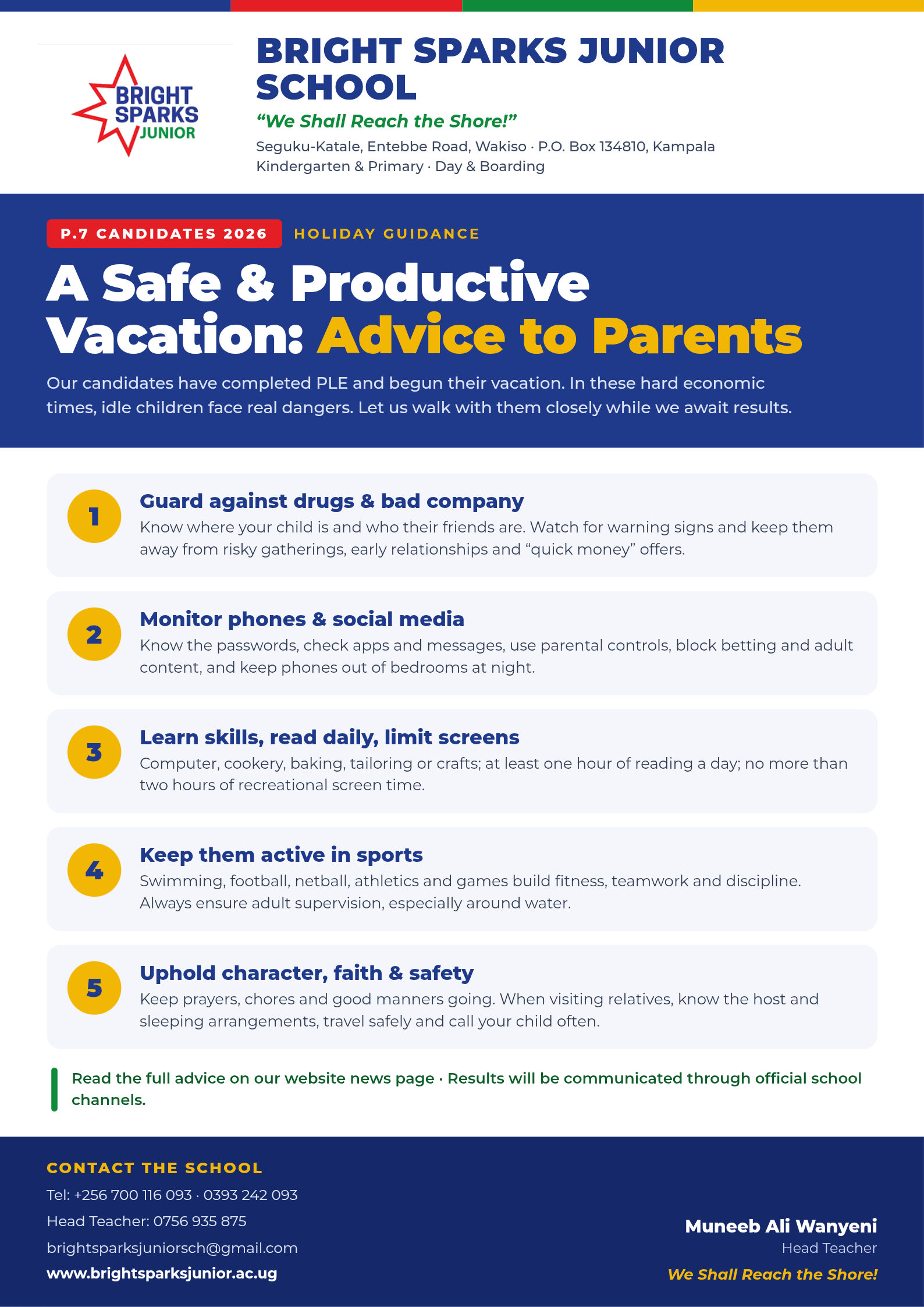
The coming weeks, before results are released, are among the most delicate in a child's life. Our candidates are leaving childhood routines behind and stepping into adolescence. They suddenly have free time, less supervision and new curiosity, and the current economic hardship has left many parents working longer hours away from home. This combination exposes children to risks they have never faced before.
We therefore share this guidance so that, together, we protect the discipline, character and faith our children have built at Bright Sparks. Truly, we shall reach the shore but only if we row together.
The dangers our children face this holiday
Drugs and substance abuse. Drug and alcohol use among young people has spread into many neighbourhoods around Kampala and Wakiso. Children are often introduced to cigarettes, shisha, kuber, sachet alcohol, marijuana and energy-drink mixes by older friends, at video halls, bodaboda stages and late-night gatherings. Know who your child spends time with, know where they are, and watch for warning signs: unexplained money or items, red eyes, unusual smells, secrecy, sudden mood swings or loss of appetite.
Social media and online risks. A child with a smartphone and free time can be reached by strangers, pornography, online gambling and betting apps, cyberbullying and harmful "challenges." Many predators pose as young people to win a child's trust. Children should not hold accounts on platforms meant for older users, and should never share personal photos, location or family details online.
Inappropriate behaviour and early relationships. Idleness, peer pressure and unsupervised outings can lead to early relationships, sexual exploitation, teenage pregnancy and disrespect towards elders. Discuss these matters openly and calmly with your child. A child who can talk freely with a parent is far less likely to seek advice from the wrong people.
Pressures of the economic crisis. Hard times can push children towards quick money: hawking on the streets, gambling, running errands for strangers, or accepting gifts and "help" that come with conditions. Explain the family's situation honestly, teach the value of hard work and saving, and warn your child that no genuine adult offers money or gifts in exchange for secrecy.
Idleness. A child with nothing to do is the easiest target for all the risks above. A simple daily timetable ; chores, study, skills, play and rest, keeps the mind busy and the child safe.
Make the waiting period productive
Results will take some months. Use this time to build skills that will serve your child in secondary school and in life.
Learn a practical skill. Our pupils already practise liquid soap making, cookery, baking and ICT at school. Build on these at home, or introduce new ones:
- Computer skills: typing, Microsoft Word, Excel and safe internet research
- Cookery, baking and home management
- Tailoring, knitting, hairdressing or crafts such as beadwork and mat weaving
- Gardening, poultry or small-animal keeping
- Music, drawing, drama and public speaking
- A small home business, such as selling liquid soap or snacks, under your supervision
Read every day. Encourage at least one hour of reading daily: storybooks, novels, newspapers, the Bible or Qur'an, and early Senior One subjects. Ask your child to tell you about what they read, or write a short summary. Reading builds vocabulary, confidence and the independent study habit secondary school demands.
Limit screen time. Television, phones, tablets and video games should not fill the day. We recommend no more than two hours of recreational screen time per day, no screens during meals, and all devices out of the bedroom and switched off by 9:00 pm. Screens kept in shared family spaces are easier to supervise.
Keep them active through sport
Physical activity is one of the best protections against idleness, stress and bad company. Encourage your child to take part in active sports such as swimming, football, netball, athletics, basketball, volleyball, cycling, skipping and martial arts, as well as traditional games with siblings and neighbours.
Sport builds fitness, teamwork, discipline and self-esteem, and it tires the body in a healthy way so children sleep well. Where possible, enrol your child in a supervised holiday programme or club. For swimming in particular, ensure a qualified adult or lifeguard is always present never allow children to swim in lakes, rivers, dams or unsupervised pools.
Uphold character and spiritual wellbeing
Our mission is to produce God-fearing, responsible citizens, and our core values Discipline, Integrity, Excellence, Faith, Growth and Responsibility must not take a holiday. Parents are the first teachers of character.
- Faith: Keep your child involved in prayers, church or mosque activities, Sunday school, madrasa and youth fellowships.
- Responsibility: Assign daily household chores and hold your child accountable for completing them.
- Respect: Insist on good manners, greetings, decent dressing and respect for elders and neighbours.
- Family time: Eat together, talk together and listen. Praise good behaviour as readily as you correct mistakes.
Monitor phone usage. A phone gives the outside world direct access to your child, at any hour. We strongly advise parents to:
- Keep children on a shared family phone where possible, rather than a personal smartphone.
- Know all passwords and check messages, call logs, apps and browsing history regularly.
- Turn on parental controls (Google Family Link on Android, Screen Time on iPhone) and safe-search filters.
- Block or remove betting, dating and adult apps, and limit social media.
- Collect phones at night and keep them outside bedrooms.
- Explain why you are monitoring out of love and protection, not suspicion so your child keeps talking to you.
Visiting relatives safely
Holidays are a good time for children to bond with grandparents and extended family. However, many cases of abuse and risky behaviour happen away from home, sometimes in the care of people the family trusts. When it is necessary for your child to travel or stay with relatives, please:
- Know exactly where your child will stay, who will be in the home, and the sleeping arrangements.
- Hand your child over personally, or use a trusted adult and reliable transport. Avoid sending children alone on bodabodas or long-distance taxis.
- Agree with the host on clear rules: curfews, phone use, outings and the company the child keeps.
- Make sure your child knows your phone number by heart and can call you at any time.
- Call your child regularly, and speak with them privately, not only through the host.
- Teach your child that their body belongs to them, that they may say "no" to anyone, and that they must report any person who makes them uncomfortable whoever that person is.
- Bring your child home immediately if you sense anything is wrong.
While we wait for results
Waiting for PLE results can cause anxiety. Reassure your child that their effort is what matters and that your love does not depend on a grade. Avoid comparing them with other children. Use this time to plan calmly for Senior One together; school choices, requirements and the habits they will need.
The school will communicate the release of results and the next steps through official channels. Please rely only on information from the school or UNEB, and beware of anyone offering to "influence" results or admissions for money.
Let us row together
The holiday should be a time of rest, growth and joy not regret. With your close attention, our candidates will return from this break more skilled, more disciplined and closer to God and family. If you notice a problem or need advice, do not hesitate to contact the school.
Bright Sparks Junior School
Seguku-Katale, Entebbe Road, Wakiso District · P.O. Box 134810, Kampala
Tel: +256 700 116 093 / 0393 242 093 · Head Teacher: 0756 935 875
Email: brightsparksjuniorsch@gmail.com · brightsparksjunior.ac.ug
Muneeb Ali Wanyeni
Head Teacher
"We Shall Reach the Shore!"